
OLED, QLED and Micro RGB are the three main TV technologies for 2026, and each one suits a different room. OLED has perfect blacks and the widest viewing angles, so it's best for films and dimmer rooms. QLED and Neo QLED are bright, great value and come in smaller sizes. Micro RGB, Samsung's newest technology, combines high brightness with the widest colour range of any TV we sell.
This guide comes from the questions we're asked every day in our Fleet showroom. If you'd rather see the difference for yourself, pop in – no appointment needed.
The quick answer
- Films in a dimmer room, or wide seating? Choose OLED.
- A bright, sunny room and you love colour? Choose Micro RGB.
- A great everyday TV, or a screen under 42"? Choose QLED or Neo QLED.
- Gaming? All three work well; OLED and Micro RGB offer the highest refresh rates in our range.
How each technology works
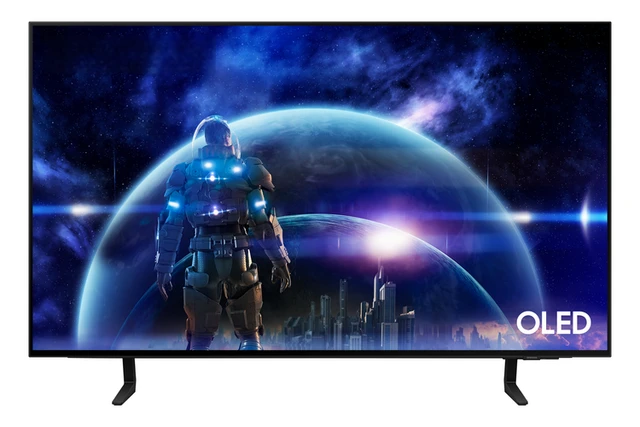
OLED: every pixel makes its own light
An OLED TV has no backlight. Each of its 8 million or so pixels lights itself and can switch off completely, so black is truly black and there's no glow around bright objects. Because nothing sits behind the pixels, the picture holds up from almost any angle and the panels are extremely thin.
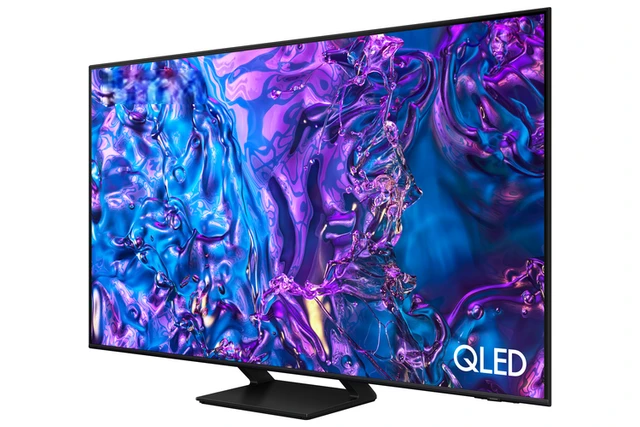
QLED and Neo QLED: an LED backlight with quantum dots
QLED TVs use an LED backlight shining through a layer of quantum dots, which turn the light into purer, brighter colours than a standard LED TV. Neo QLED swaps the backlight for thousands of tiny Mini LEDs that dim and brighten in zones, for deeper blacks and stronger contrast. Both are bright and hold their own in a sunny room.
NEW FOR 2026
Micro RGB: a backlight made of red, green and blue LEDs
Instead of blue or white LEDs filtered into colour, Samsung's Micro RGB backlight is built from thousands of microscopic red, green and blue LEDs, each producing its own light and dimmed in fine zones. That means less colour bleed and a far wider colour range – the Samsung R85H covers 100% of the BT.2020 colour standard, certified by VDE – with the brightness of an LED TV. It isn't the same as MicroLED, a much more expensive technology where every pixel is its own LED.
OLED vs QLED vs Micro RGB at a glance
| OLED | QLED / Neo QLED | Micro RGB | |
|---|---|---|---|
| Black levels | Perfect | Good (Neo QLED: very good) | Very good |
| Brightness | Good to very good | Very good | Excellent |
| Colour | Excellent | Very good | Widest range |
| Viewing angle | Best | Good | Good |
| Burn-in | Very unlikely with varied viewing | Not a concern | Not a concern |
| Gaming (our range) | Up to 165Hz | Good for consoles | Up to 144Hz |
| Best for | Films, dimmer rooms, wide seating | Bright rooms, everyday TV, smaller sizes | Bright rooms, colour, sport & gaming |
| Sizes we stock | 42"–83" | 32"–55" | 55" & 65" |
Head to head
Which is better, OLED or QLED?
OLED wins on black levels, contrast and viewing angles, which is why it's the favourite for films and evening viewing. QLED and Neo QLED win on brightness, price and small-screen choice, with no burn-in worries. If your TV faces a big window or you need a screen under 42", QLED is usually the better buy; if you mostly watch with the lights down, OLED is hard to beat.
Micro RGB vs OLED
Micro RGB is brighter and has a wider colour range, so bright daytime viewing, sport and vivid content look outstanding. OLED still has perfect blacks and the widest viewing angles. Think of Micro RGB as the bright-room alternative to OLED, rather than a replacement for it.
Micro RGB vs Neo QLED
Both use an LED backlight dimmed in zones, but Micro RGB's red, green and blue LEDs produce colour directly, giving richer, more accurate colour with less bleed. Neo QLED costs less and comes in smaller sizes; Micro RGB is the step up for picture quality.
Which suits your room?
A word on burn-in
Burn-in is the question we hear most about OLED. With normal, varied viewing it's very unlikely: modern OLEDs use pixel-shifting and automatic panel care routines to prevent it. The main risk is the same static image on screen for many hours every day, such as a news ticker or a computer desktop. QLED, Neo QLED and Micro RGB TVs use an LED backlight, so they aren't prone to burn-in.
See the difference in Fleet
The differences are much easier to judge in person than on a spec sheet. We have a selection of 2026 TVs on demo at 185 Fleet Road, Fleet, GU51 3BL – walk in, no appointment needed, or call 01252 811800 to check a model is on demo. We're an authorised Samsung and LG dealer with competitive prices, price matching, free delivery within 10 miles and professional installation.
FAQs
Is OLED better than QLED?
For black levels, contrast and viewing angles, yes. QLED is brighter, cheaper for the size, comes in smaller screens and isn't prone to burn-in, so it can be the better choice for a bright room or a second TV.
What is the difference between QLED and Neo QLED?
Neo QLED uses thousands of Mini LEDs controlled in zones instead of a standard backlight, giving deeper blacks, brighter highlights and less glow around bright objects.
Is Micro RGB better than OLED?
It's different rather than simply better. Micro RGB is brighter with a wider colour range, ideal for bright rooms. OLED has perfect blacks and wider viewing angles, ideal for films in dimmer rooms.
Which TV technology is best for a bright room?
Micro RGB and Neo QLED are the brightest options. OLEDs with anti-glare screens, such as Samsung's Glare Free models and LG's G6, also cope well with reflections.
Where can I compare OLED, QLED and Micro RGB TVs near me?
If you're near Fleet, Farnborough, Farnham or Camberley, visit Jennings Sound & Vision at 185 Fleet Road, Fleet, GU51 3BL. Walk in with no appointment, or call 01252 811800 to check which models are on demo.